Page 24: Research news on Human-centered AI interfaces

Human-centered AI interfaces encompass computational systems that use machine learning, generative models, and multimodal sensing to mediate, augment, or interpret human communication and behavior. Work in this area spans assistive communication for speech, hearing, and motor impairments, real-time sign language and speech technologies, and social robots that adapt behavior and express empathy. Vision-language models and video analytics support long-video reasoning, activity recognition, and error detection, while interactive agents, privacy-aware speech systems, and affect-sensitive tools enable more accessible, expressive, and context-aware human–AI interaction across physical and virtual environments.

Consumer & Gadgets

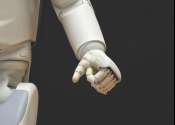
Humanoid robots in the home? Not so fast, says expert

It's been a goal for as long as humanoids have been a subject of popular imagination—a general-purpose robot that can do rote tasks like fold laundry or sort recycling simply by being asked.

Machine learning & AI

Dialogue systems learn new words with fewer questions

Researchers at the University of Osaka have developed a mechanism that allows spoken dialog systems to learn new words through conversation without overwhelming users with repetitive questions. By optimizing when to ask a ...

Business

Amazon adds AI muscle to connected home lineup

Amazon on Tuesday unveiled the latest generation of connected products, featuring enhanced artificial intelligence capabilities designed to make interactions with AI more frequent and natural.

Machine learning & AI

Artificial intelligence may not be artificial

The term artificial intelligence renders the sense that what computers do is either inferior to or at least apart from human intelligence. AI researcher Blaise Agüera y Arcas argues that may not be the case.

Machine learning & AI

AI tool helps researchers treat child epilepsy

An artificial intelligence tool that can detect tiny, hard-to-spot brain malformations in children with epilepsy could help patients access life-changing surgery quicker, Australian researchers said on Wednesday.

Hi Tech & Innovation

AI-generated voices now indistinguishable from real human voices

Many people still think of AI-generated speech as sounding "fake" or unconvincing and easily told apart from human voices. But new research from Queen Mary University of London shows that AI voice technology has now reached ...

Robotics

Creating robots that adapt to your emotion

Robots might be getting smarter, but to truly support people in daily life, they also need to become more empathetic. That means recognizing and responding to human emotions in real time.

page 24 from 37